
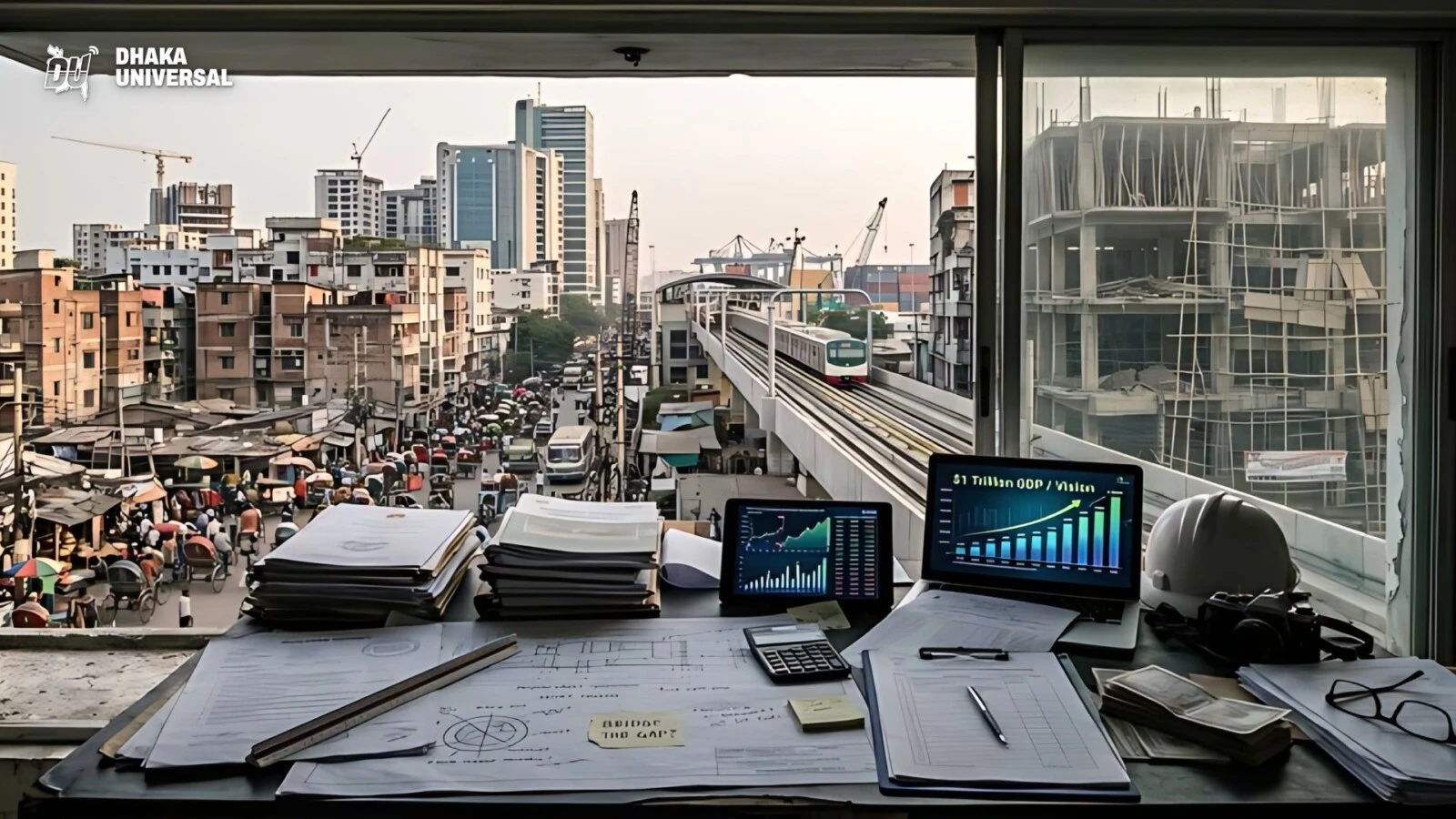
Structural hurdles in tax collection, export diversification and financial stability threaten the push by Bangladesh toward a trillion-dollar economy, according to a report by New Age BD. Reaching this target requires nominal dollar growth of about 8.1 per cent every year, starting from a current gross domestic product of roughly $450 billion to $470 billion.
Growth rates of 6 per cent or 5 per cent would leave the economy at about $820 billion or $750 billion, creating a gap of $180 billion to $250 billion. Compound growth models assume future results will match the past. Underlying this projection sit a foreign exchange shortage, a banking sector burdened by bad loans, low tax collection and high reliance on a single export industry.
Governance issues pose the deepest constraint for the country. Defaulted loans reach about 32.8 per cent of all credit in the banking system, meaning roughly one taka in every three lent is not performing. Years of insider lending, political borrowing and repeated rescheduling have hidden deep insolvency on bank balance sheets.
Capital flight and a parallel foreign exchange market drain formal reserves through trade misinvoicing and informal channels. Authorities have responded with import restrictions on raw materials and machinery, which slows industrial production and deters investors. Administrative hurdles like discretionary enforcement and slow customs clearance add further costs for firms.
High-income transitions depend on state capacity to raise domestic revenue and invest in infrastructure. The state collects about 7.5 to 8.2 per cent of gross domestic product in taxes, while peer developing nations collect 15 to 20 per cent. This leaves a shortfall that forces the government to borrow heavily, which crowds out private credit in a stressed banking sector.
Export earnings rely heavily on the ready-made garments sector, which supplies over 80 per cent of total exports. After least developed country graduation, Bangladesh will gradually lose duty-free and quota-free access to major markets like the European Union and Canada. Tariffs of roughly 8 to 12 per cent on textile exports would hit thin margins directly.
The background
Over the past decade, national economic growth rested on high headline numbers, expanding infrastructure and strong social indicators. Policymakers and analysts anchored future projections on reaching a trillion-dollar economy by the 2030s. Upcoming least developed country graduation also removes the trade preferences that built the modern export industry.
What it means
These structural limits affect exporters facing new tariffs, small businesses struggling for credit and workers relying on stable job growth. Analysts and business owners should watch for central bank autonomy, tax automation and export diversification efforts before trade preferences expire.