
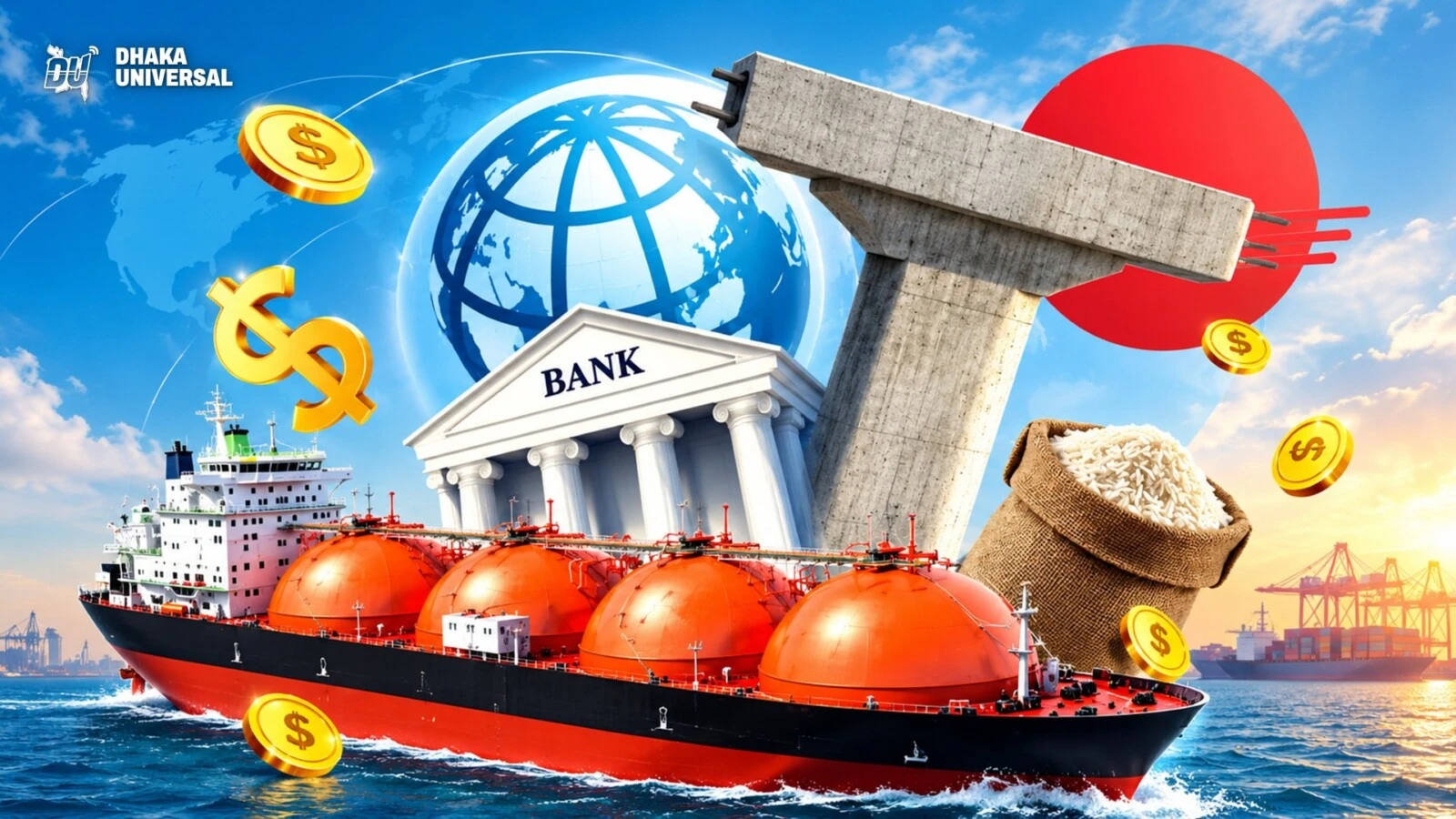
Bangladesh has formally requested $2.77 billion in project financing and an additional $1 billion in direct budget support from the World Bank for the current financial year. The funds are intended to stabilise the financial sector, restore economic growth, and strengthen institutional capacity.
According to senior Ministry of Finance officials, the immediate funding will cover liquefied natural gas imports, banking sector reforms, and major transport infrastructure projects. The Business Standard first reported the deal, noting that the funds aim to address pressing fiscal needs.
In addition to the current requests, the government wants $10 billion in loans over the next three years beyond regular project allocations. This ambitious request falls under a proposed Resilience, Reform, and Investment Partnership framework.
The push for extra funding began when the prime minister raised the proposal during a bilateral meeting with the World Bank president on 22 September on the sidelines of the United Nations General Assembly in New York. Discussions continued during the annual meetings in Bangkok, where the delegation met with World Bank officials.
Following the summit, a ministry report confirmed that Bangladesh and the World Bank agreed to establish a joint technical team within 60 days to shape the partnership. The government aims to finalise the agreement by June next year.
Finance Minister Amir Khosru Mahmud Chowdhury led a 12-member delegation to the Bangkok meetings and confirmed that negotiations are progressing. He told The Business Standard that discussions are ongoing and no final decision has been reached yet.
Commenting on the reliance on external funding, Centre for Policy Dialogue distinguished fellow Dr Fahmida Khatun noted that the government lacks the necessary fiscal space to address pressing economic needs. However, she warned against expanding national debt without adequate safeguards.
She stated that funds must be spent transparently and efficiently with clear outcomes to prevent adding to existing debt burdens. During the summit, the Bangladeshi delegation held separate bilateral talks with World Bank Managing Director for Operations Anna Bjerde and South Asia Regional Vice President Joelle Buerli.
The government has sought $350 million in International Development Association guarantees to facilitate long-term liquefied natural gas imports at lower costs. It also requested $450 million for the Financial Sector Support Programme-2 to drive banking reforms, alongside $300 million for an emergency support for food security project.
Three infrastructure projects have also been identified as priorities in the discussions. These include the Dhaka-Chattogram rail chord line, the Dhaka-Chattogram expressway, and the Dhaka Inner Circular Ring Road.
Preliminary discussions have also taken place regarding an umbrella investment project to restore rivers and canals around Dhaka and tackle pollution. Under the wider partnership framework, the government plans to spend $4 billion on urgent imports like energy and fertiliser.
Another $1.5 billion would support enterprise trade and employment continuity for micro, small, and medium-sized enterprises. A further $3 billion would go towards financial sector recovery, while the remaining $1.5 billion would be allocated to co-financing instruments.
Former World Bank Dhaka office lead economist Zahid Hussain noted that annual allocations under the three-year country-based International Development Association programme had never exceeded $4.5 billion. He stated that the additional $10 billion sought may need to come through other financing channels.
He added that financing for major projects like expressways and rail corridors would depend on their design and implementation capacity. Meanwhile, the delegation also held negotiations with International Monetary Fund officials regarding a separate $4.5 billion loan package.
The International Monetary Fund stressed the urgency of structural policy reforms, particularly boosting the tax-to-GDP ratio and resolving capital shortfalls in banks. The finance minister acknowledged that this facility will come with stringent performance criteria.
Meetings were also held with International Finance Corporation officials to discuss banking recapitalisation, trade financing, and private sector investment. A separate delegation met with global financial institutions to discuss credit ratings and potential sovereign bond issuance.
The background
The push for external funding follows months of economic strain and dwindling foreign exchange reserves that prompted the government to seek emergency assistance. Previous discussions at the United Nations General Assembly laid the groundwork for the current negotiations with multilateral lenders.
What it means
These loan negotiations will directly impact businesses, depositors, and taxpayers as the government moves forward with banking reforms and tax collection targets. Stakeholders should watch for the upcoming arrival of International Monetary Fund staff teams in Dhaka to see what performance criteria will be attached to the funds.