
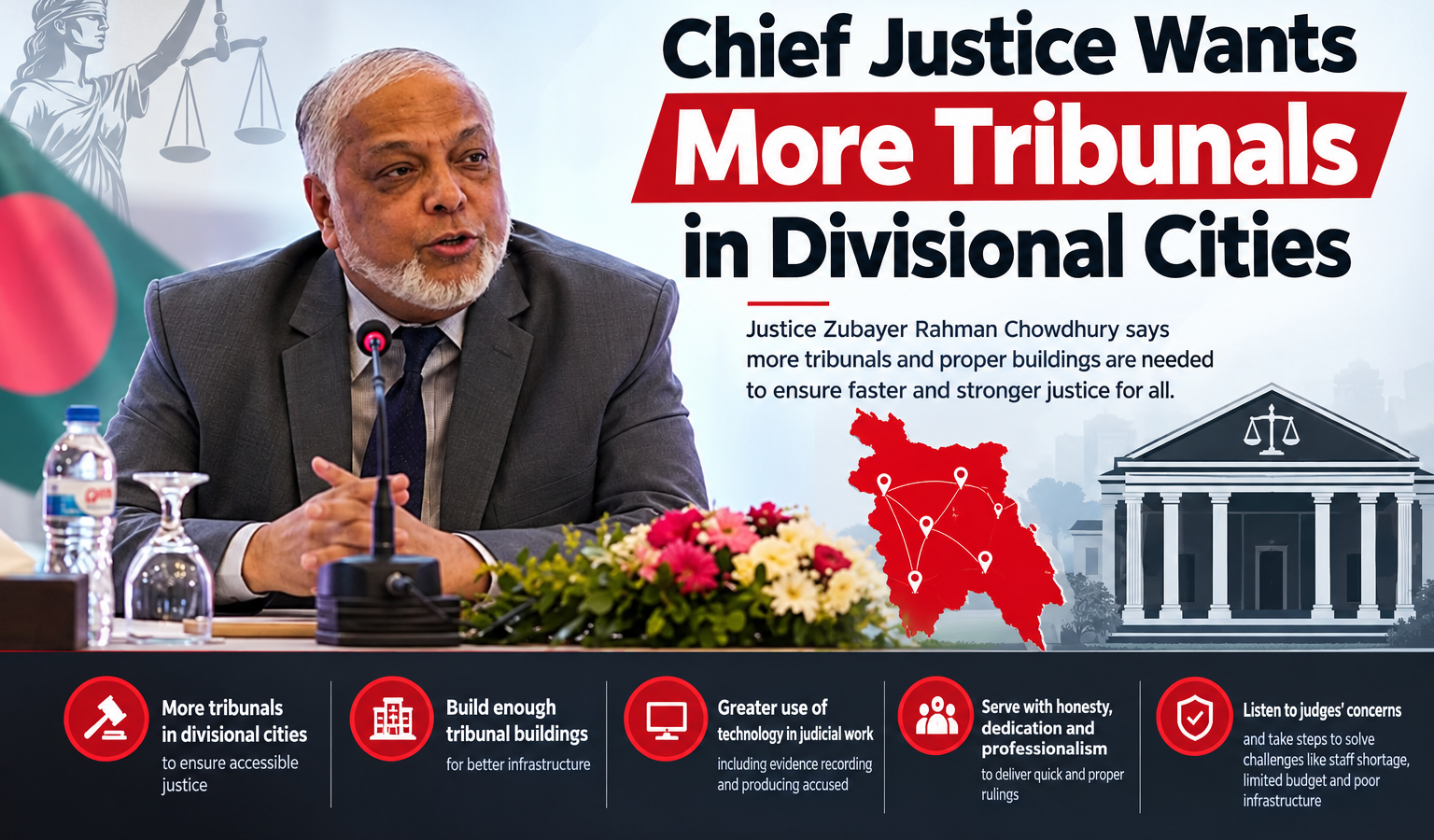
Chief Justice Zubayer Rahman Chowdhury has said the country needs more tribunals in its divisional cities, and stressed on building enough tribunal buildings to make that happen. He shared this view while speaking at a program for members of the Bangladesh Judicial Service working in Sylhet division, held today, Saturday, at a hotel and resort on the outskirts of Sylhet city.
According to him, the main goal of the judiciary is to make sure people get fast and solid justice. Judges from courts in Sylhet, Habiganj, Moulvibazar and Sunamganj districts joined the event.
During his speech, the Chief Justice also asked for wider use of technology in judicial work, including things like recording evidence and producing accused persons in court, wherever it can be properly applied. He promised that the Supreme Court will offer all the support needed for this.
He told the judges to carry out their duties with the highest level of honesty, dedication and professionalism so that people seeking justice get quick and proper rulings. He also asked them to make full and proper use of official court hours, and not to leave their workplace without permission from the right authority. Along with that, he pointed out the importance of properly following the law and judicial standards at all times.
Judges working in different courts across Sylhet division spoke at the event about the challenges they face in delivering quick and effective justice, such as a shortage of judges and support staff, limited budgets, and poor infrastructure. The Chief Justice listened to these concerns and assured them that steps will be taken quickly to solve these problems.
Justice Md. Atabullah, who is in charge of the Monitoring Committee for Subordinate Courts in Sylhet division, and Md. Habibur Rahman Siddiqui, Registrar General of the Supreme Court, were present at the event, along with others. Chief judicial magistrates, chief metropolitan magistrates, and senior district and sessions judges from the four districts of Sylhet division also spoke, sharing their experiences, hopes and opinions on delivering faster justice, clearing cases quickly, improving skills in judicial work, and building stronger public trust in the judiciary.